Castle Street, Glasdir and Parc-y-Dre
The centre of Ruthin is medieval and Georgian: Castle Street's burgage plots were laid out in 1283, the timber-framed Old Courthouse dates from around 1401, and the late eighteenth-century town houses on Well Street are the kind of building where a bathroom was added on a landing a century after the house was built. Many of these are listed, several at Grade II*, and all of them sit in the Ruthin Conservation Area. Bathrooms there need thick-wall thinking: waste routes found first, walls boarded flat, floors levelled, nothing external changed without checking with Denbighshire County Council.
The other Ruthin is on the edges. Glasdir, north of the town, is a 2000s estate of 122 homes that flooded in November 2012; Taylor Wimpey stopped the next phase for seven years while flood defences and a new primary school were built, then building resumed, and a further 63 affordable homes by Williams Homes for ClwydAlyn include adapted bungalows with air source heat pumps. Parc-y-Dre was built on the old racecourse. Those estates have standard bathrooms, timber floors and short drain runs, so a full renovation or a walk-in shower there is a routine week.
Moderately hard water in the Vale of Clwyd
Ruthin is in Dwr Cymru Welsh Water's Denbigh (Alwen) supply zone, which the supplier classes as moderately hard; it does not publish a figure. In a bathroom that shows as limescale on shower glass, chrome and heads, and a shorter life for electric shower elements. We specify a thermostatic valve with an easy-clean head, coated glass and taps that wipe clean, and we measure pressure and flow at the survey, which in a hillside town house can be modest.
Flood defences, building control and the conservation area
If your house is on Glasdir, the 2012 flood is part of the estate's history and the defences built afterwards are why building resumed; for a ground-floor bathroom we still tank the floor fully and choose finishes that can be dried out. Denbighshire County Council runs building control from Ruthin itself (its correspondence address is a Ruthin PO box), and new drainage, structural changes and bathroom electrics are the notifiable items; the electrics that need certifying are done by a registered electrician we work with, and you get the certificate. In the conservation area, and on any listed house, we keep extractor vents and new pipework off the street elevation and check first.
Choosing tiles and suites in Ruthin
Ruthin has a tile and bathroom showroom of its own, Ruthin Decor, which is unusual for a town of its size and useful if you want to see tiles in daylight before you choose. For a wider range of suites we bring samples and brochures to the house, draw the layout on the spot and price every item on the quote so you can swap anything.
What we do in Ruthin
- Full bathroom renovations in listed and period town houses
- New bathrooms and bath-to-shower conversions on Glasdir and Parc-y-Dre
- Wet rooms and level-access showers, including in adapted bungalows
- Ensuites and downstairs toilets
- Hard-water shower specifications: easy-clean heads, coated glass
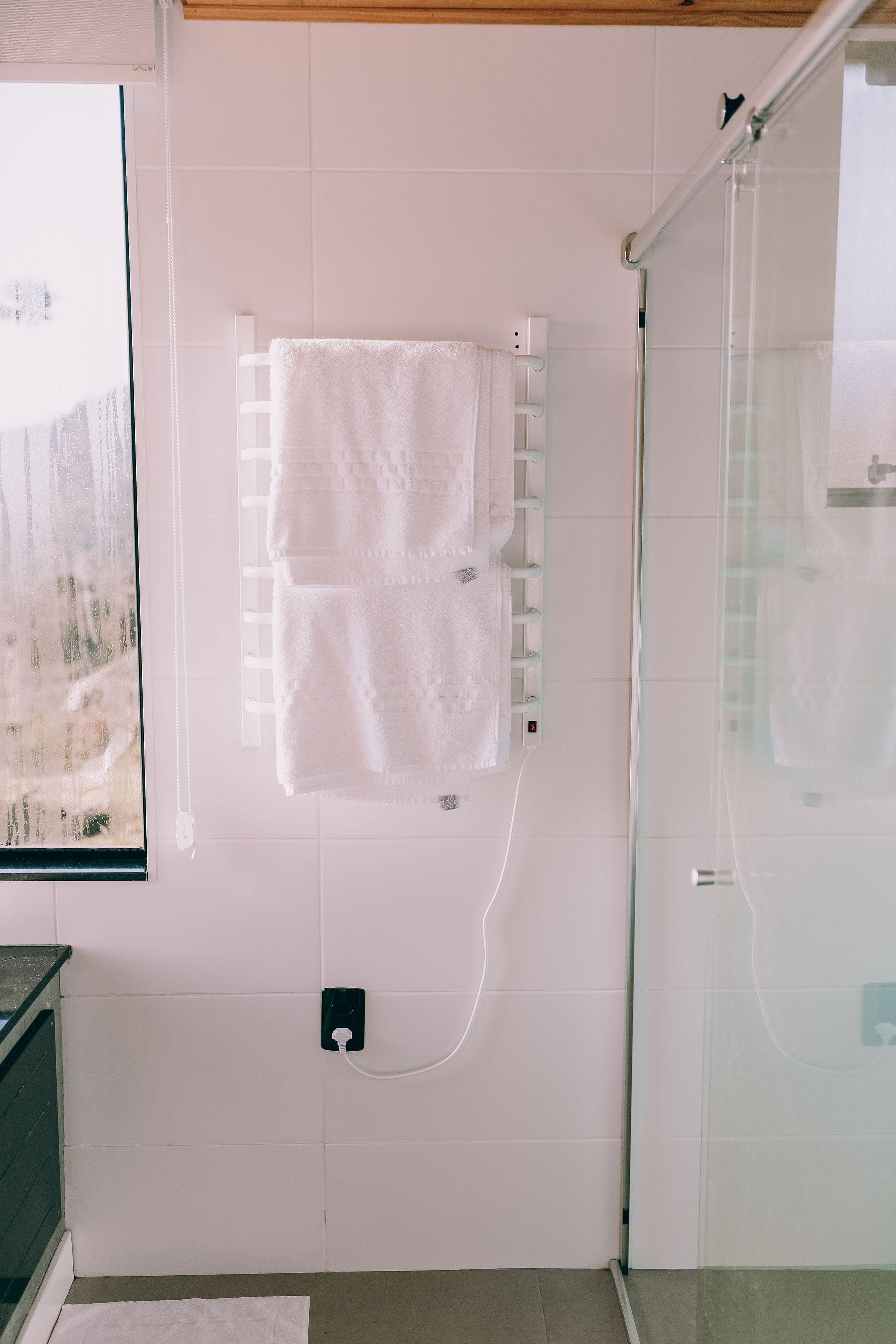
- Tiling, wall panels, plumbing, towel rails, fans and lighting (electrician certified)
- Repairs, resealing and regrouting
Example scenario: a Well Street town house
A late Georgian house with a half-landing bathroom, 1.8 by 2.4 metres, two outside walls of solid stone, a window onto the street and the soil pipe at the back. We keep the window untouched, board and tank the walls, run the shower waste to the rear, fit a 1200 by 900 tray with a coated glass panel, a freestanding basin on a vanity, a back-to-wall toilet, metro tiles in the shower and a patterned porcelain floor, with the fan ducted to the rear elevation. Eight working days.
Emergencies in Ruthin
Ruthin sits just outside the area we cover for same-night emergencies, so if a pipe bursts at night, a plumber in the Vale will reach you sooner than we can. Once the water is off, WhatsApp or call us: we do the lasting repair, and any refit the damage needs, as a booked job, which in the listed houses of Castle Street and Well Street means working with the old fabric rather than against it.