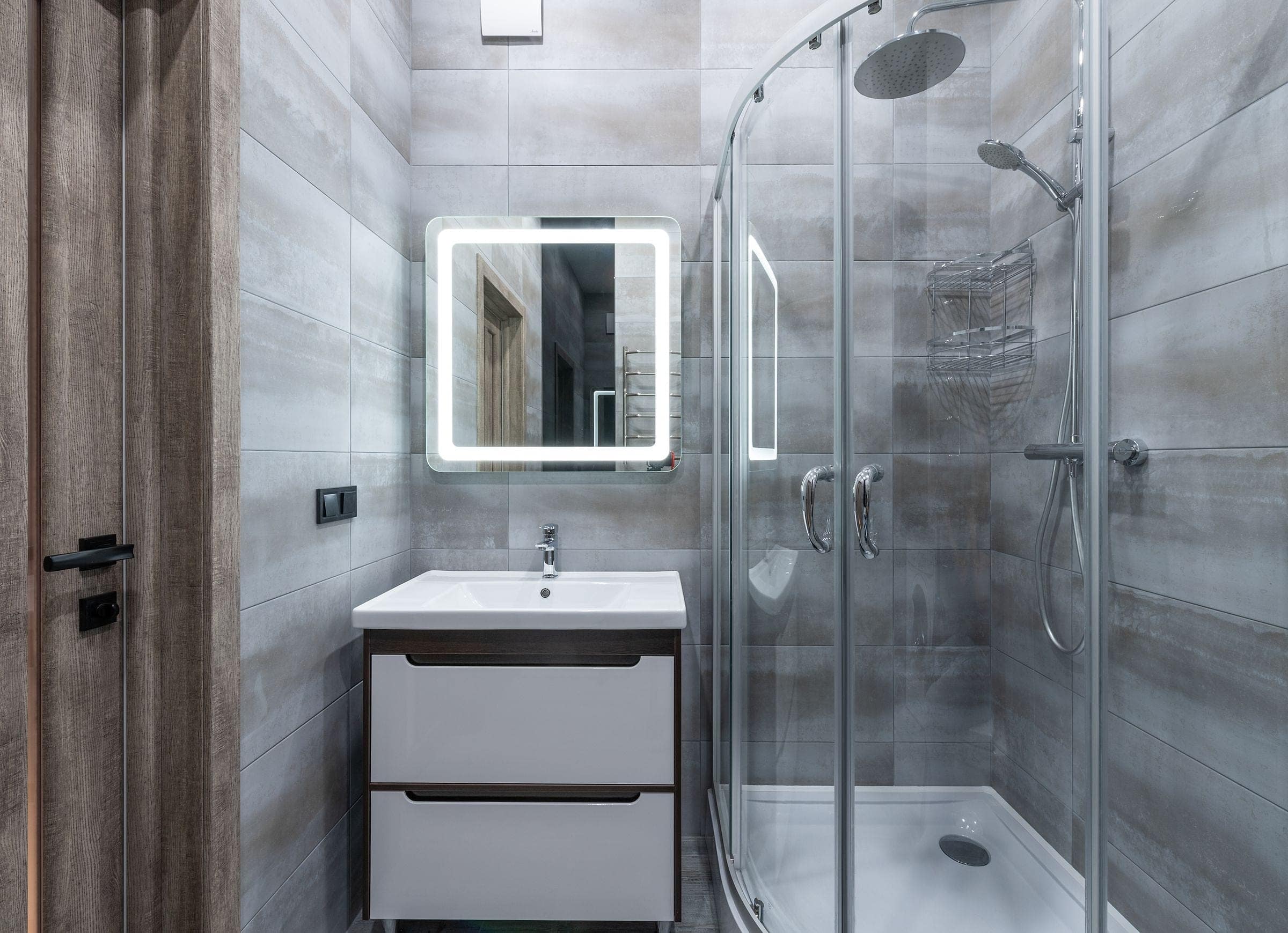
Why people choose panels
Speed, cleaning and warmth. A panelled shower is done in a day where tiling takes three or four. There are no grout lines to go grey or grow mould, so a wipe over keeps it looking new. Panels are warmer than tiles, which in a cold North Wales bathroom in January is not a small thing. And in a rental property, a panelled bathroom stands up to tenants in a way grout never does.
The look has caught up too. Marble-effect panels with a satin or matt finish are hard to tell from the real thing at a glance, and large-format stone and concrete effects suit the clean, modern rooms most people are asking for now.
Panels or tiles: the honest comparison
Panels are better when
- You want the shower back in use quickly
- You hate cleaning grout
- The room is a rental, a holiday let or an HMO
- The walls are rough and you would rather not board and skim them
- The budget is tighter and the schedule is short
Tiles are better when
- You want pattern, texture or a handmade look
- You are after the highest resale value in a premium house
- You want a tile floor that runs up the wall for a wet room look
- You want a shower niche or a tiled shelf built in
- The room is a period property where tiles suit the house
Plenty of rooms end up with both: panels in the shower, tiles on the floor and a tiled splashback behind the basin.
Fitting panels properly
The panel system matters less than the fitting. Panels go onto a flat, dry wall or onto battens; they are glued with the manufacturer's adhesive and the joints are made with the matching profiles or a tongue-and-groove edge sealed with silicone. Internal corners, external corners and the top edge each get the right trim. Where the panel meets the tray or the bath we seal to the tray with a continuous bead on a dry joint, once, and leave it to cure before the shower is used. Cut-outs for the valve and the shower outlet are measured twice and cut with a fine blade, because a cracked panel cannot be patched.
Over existing tiles: if the tiles are sound (no loose or hollow ones), panels can go straight over them on adhesive or battens, which saves a day of rip-out and a skip. We check every tile first.
Types of panel we fit
- PVC hollow-core panels: lightest and cheapest, tongue and groove, good for ceilings and budget rooms.
- Solid PVC and acrylic-capped panels: heavier, more rigid, better finishes, the most common choice for showers.
- Laminate panels on a plywood or MDF core: the most realistic stone and timber effects, the premium option.
- Ceiling panels: for wet rooms and bathrooms where condensation has ruined paint more than once.