Zones, IP ratings and why the electrician certifies
A bathroom is divided into zones: zone 0 inside the bath or shower tray, zone 1 above it to 2.25 metres, zone 2 the 600 millimetres beyond that, and the rest of the room outside the zones. Every fitting has an IP rating that says how well it keeps water out, and the zone decides the minimum rating: IP67 in zone 0, IP65 in zone 1, IP44 in zone 2. Sockets other than shaver sockets are not allowed within 3 metres of the bath or shower. Circuits in bathrooms need RCD protection.
Electrical work in a bathroom is notifiable under Building Regulations in England and Wales (Part P), which means it must be either notified to Building Control or carried out by an electrician registered with a competent person scheme who self-certifies and issues the certificate. That is why we use a registered electrician for every bathroom circuit rather than doing it ourselves. You get the certificate, and it is one of the documents a buyer's solicitor asks for when you sell.
Ventilation that actually works
Building Regulations ask for an extract rate of at least 15 litres a second from a bathroom with a bath or shower. Many fans fitted in houses around here are the cheapest 100 millimetre axial fan available, ducted through three bends of flexible hose to a vent on the wrong side of the house, giving perhaps half of that in practice. The result is condensation on the window, black mould in the corners and a bathroom that never dries.
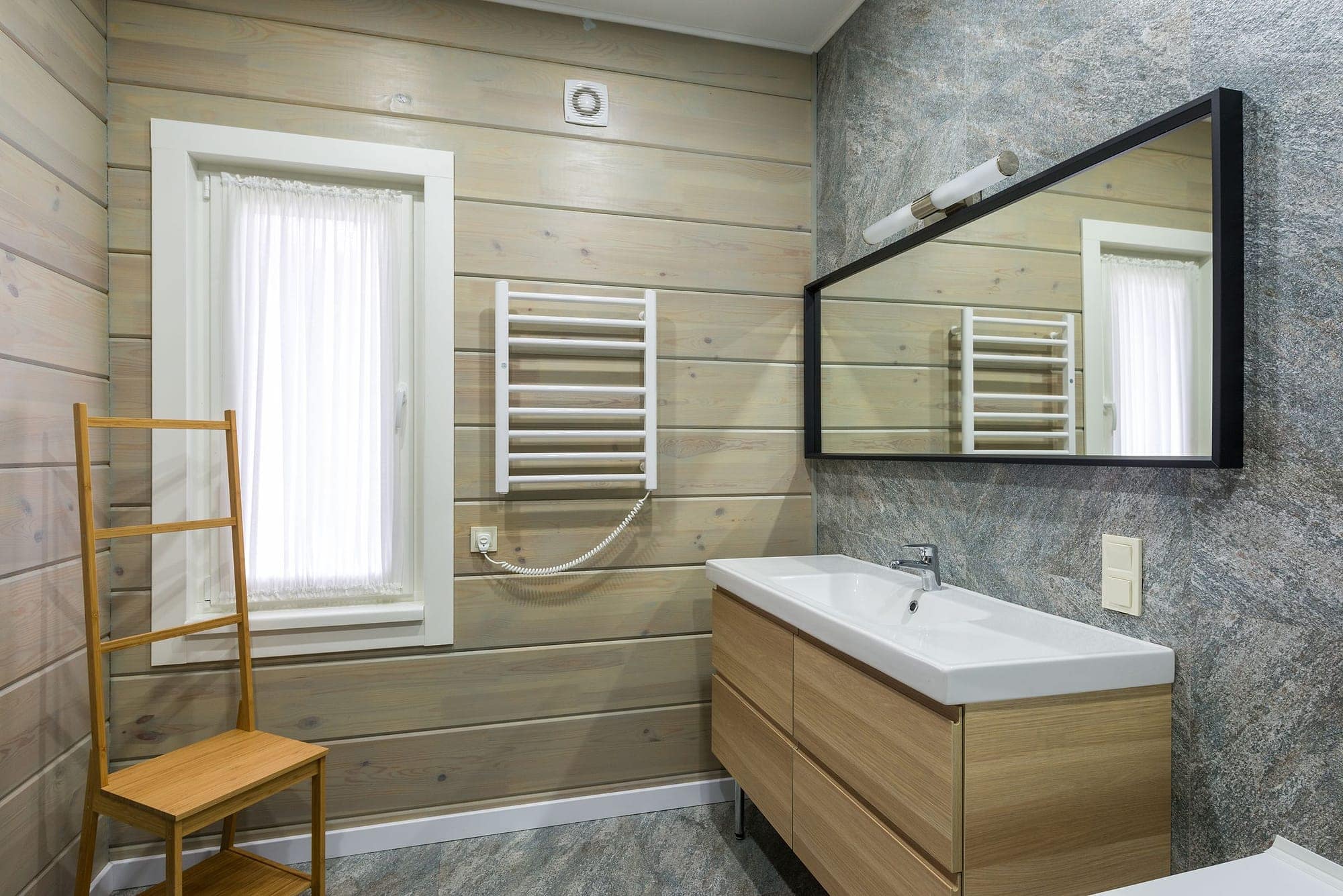
What we fit: a fan sized for the duct run (a centrifugal or mixed-flow fan where the run is long), rigid or smooth ducting by the shortest route to an external grille, a humidity sensor or a timer overrun of 15 to 20 minutes, and a model quiet enough that you do not switch it off. In an internal bathroom with no window the fan is a requirement, and we wire it so it cannot be isolated by the light switch alone.
Lighting that suits a bathroom
- Downlights: IP65 fire-rated LEDs in zones 1 and 2, spaced for even light rather than a grid of spots.
- Mirror lighting: an LED mirror or lights either side of the mirror, so your face is lit from the front and not from above.
- Shelf, niche and plinth lighting: low-level LED strip on a driver outside the zones, for a soft light at night.
- Colour temperature: around 3000 K reads warm and flattering; 4000 K is cooler and clinical. We will show you the difference.
- Switching: a pull cord or a switch outside the door, and a sensor option for the night light.
Showers, rails and warm floors
An electric shower needs its own circuit from the consumer unit, sized to the kilowatt rating, with a double-pole pull-cord isolator in the bathroom. A dual-fuel towel rail needs a fused spur for the element, fitted outside the zones. Each of these is designed into the first fix so cables are in the walls before the boards go on, which is why we ask you to decide on them at the design stage.