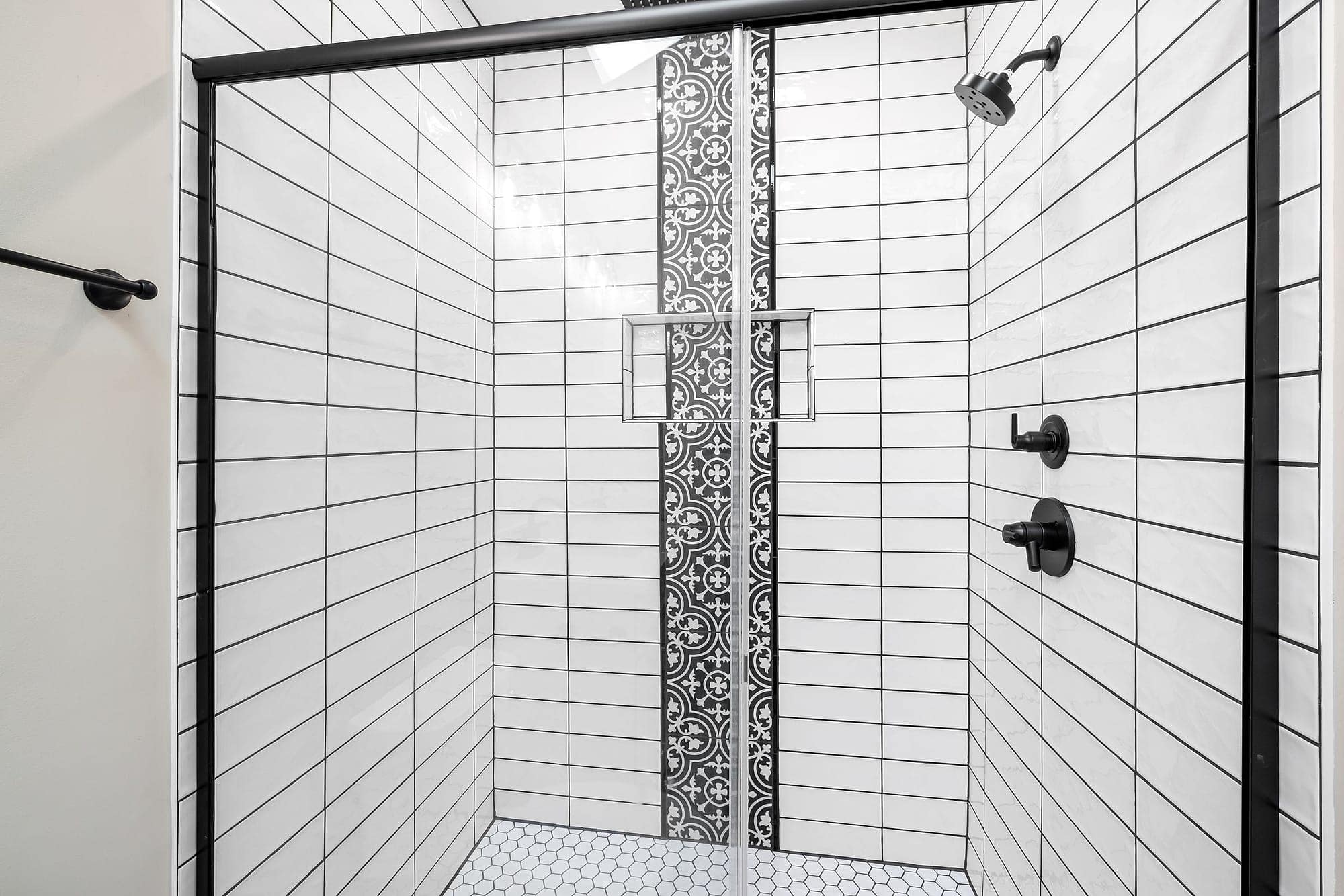
Preparation is most of the job
A tile is only as flat as the wall behind it. Old plaster in the terraces around Wrexham and Chester is rarely flat enough for large tiles; a 1200 millimetre tile over a wall that bows 5 millimetres shows a lip at every joint. So we board walls that need it with cement board or a tile backer, we level floors with a self-levelling compound where they need it, and we prime everything. In shower areas and around baths we tank the boards before tiling: a liquid or sheet membrane that stops water reaching the wall if a grout line or a silicone joint ever fails.
Then setting out. Where the first tile goes decides where every cut lands. We set out from the centre of the main wall so the cuts at each end are equal, we plan where the tile joints meet the window and the shower niche, and on a floor we check which way the eye looks when you walk in. Ten minutes with a tape and a pencil saves a wall of slivers.
Tile types and what they need
| Tile | Where it works | What to know |
|---|---|---|
| Ceramic | Walls, splash areas, budget rooms | Light, easy to cut, cheaper; not for floors in a wet room |
| Porcelain | Floors, showers, wet rooms, anywhere | Dense and hard-wearing; needs a flexible adhesive and a proper cutter |
| Large-format porcelain | Feature walls, floors, shower walls | Fewer grout lines; needs a flat substrate, two people and a levelling system |
| Natural stone (marble, limestone, slate) | Walls and floors in dry-ish rooms | Must be sealed and resealed; some stones stain and etch |
| Mosaics | Shower floors (grip), niches, borders | Follow the fall in a wet room; more grout to keep clean |
| Metro and brick-shaped | Splashbacks, half walls, period houses | Pattern and bond matter; bevelled edges hide small wall faults |
Slip ratings: R10 for a bathroom floor, R11 inside a shower or wet room. We will not fit a polished tile on a shower floor.
Grout, trims and silicone
Grout: we use a flexible, mould-resistant grout, with epoxy grout in wet rooms and on floors where stains would be a problem. Grout joints are sized to the tile: 2 to 3 millimetres on rectified porcelain, wider on handmade-look tiles. Trims: metal or colour-matched profiles on external corners and at the top of half-height tiling, so there are no sharp tile edges. Silicone: a matching colour, in the movement joints (floor to wall, wall to wall, around the bath and tray) and nowhere else, because silicone in a grout joint is a shortcut that fails.
Regrouting, resealing and repairs
Not every tiled bathroom needs retiling. If the tiles are sound and you dislike the grout, we rake the old grout out and regrout, strip the old silicone and reseal, and the room looks new for the price of a day's work. If a few tiles are cracked or drummy (hollow when tapped), we replace those, with a matching tile if you kept some or the closest match if not. If the wall behind is damp or the tiles are coming away in sheets, we tell you, because regrouting a failing wall is money wasted.