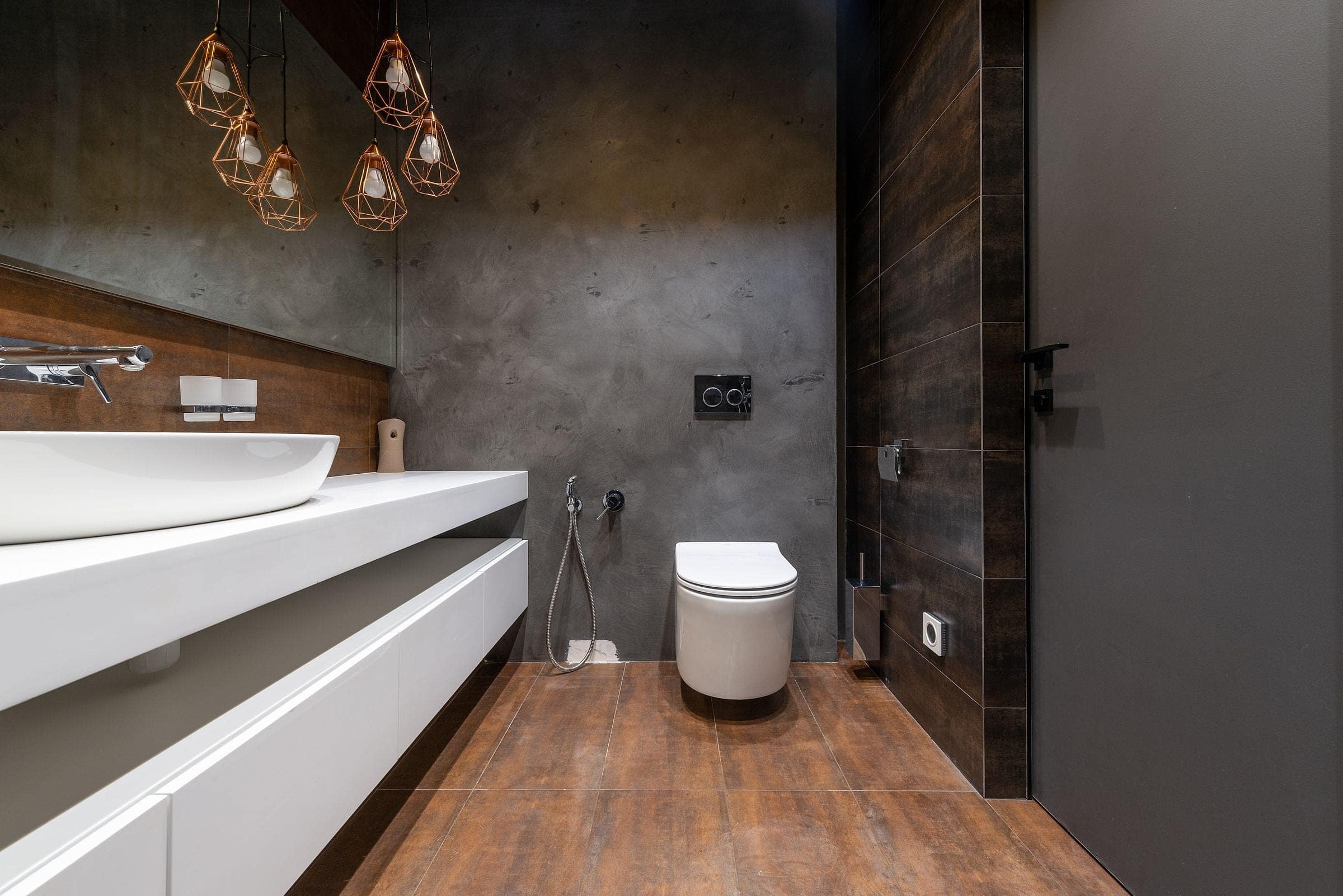
Who we work for
The businesses that call us are the ones too small for a facilities contractor and too busy to manage three trades: a barber in Wrexham whose staff toilet has not been touched since the unit was built, an office in Chester Business Park wanting two WCs and a shower for the cyclists, a salon in Mold that needs a customer toilet to pass its next inspection, a cafe on the coast fitting out a new unit. We quote the whole job, we work the hours that suit the business, and we bring in the electrician and, where needed, the electrician's certificates for the file.
What commercial toilets need that domestic ones do not
- Fittings that take abuse: wall-hung pans on a steel frame, concealed cisterns with an access plate, solid basins, heavy-duty seats.
- Surfaces that clean: wall panels or large tiles, a sealed floor with a coved skirting where food is handled, no grout to harbour anything.
- Hand-wash provision that meets food hygiene and workplace rules: hot and cold water, soap and drying, with sensor or lever taps where appropriate.
- Ventilation sized for use by many people, often a higher extract rate than a home bathroom, running on a timer or sensor.
- Accessible provision where the premises need it: the right door width, turning space, rails and a basin reachable from the pan.
- Signage, locks that can be opened from outside, and an emergency cord in an accessible WC.
Working around a trading business
We plan commercial work backwards from the hours you are open. A shop toilet can often be stripped and re-plumbed on a Sunday and finished on Monday evening, so staff lose the facility for a day. A salon with two toilets keeps one in use while the other is done. An office is worked around the quiet days. We protect floors and shopfronts, keep noise to agreed times, and leave the premises clean and open for trade each morning. The quote states the days and the hours before you commit.
Compliance and paperwork
Electrical work is done by a registered electrician and certified. Ventilation is sized to the room and its use. Where the premises provide food, the hand-wash arrangements follow the food hygiene guidance your environmental health officer will look at. Where an accessible toilet is being fitted we work to the dimensions in the Building Regulations guidance for the type of premises. We do not sign off anything as a surveyor or an inspector would; we build it so that when they look, it passes.