Guide · 6 minute read
How long does a bathroom renovation take?
By Dee Valley Bathrooms · Updated 3 November 2026
The short answer
Our full bathroom renovations average four to five working days, from the morning the old room comes out to the afternoon you get it back. A like-for-like refurbishment with nothing moved takes three to four. A downstairs cloakroom takes two to three days, an ensuite three to five, and a wet room six to eight, because the tanking and the floor need curing time that cannot be rushed. A fitter working alone usually needs one to two weeks for a full bathroom. We tell you before the start which days the toilet is out of use, and the shower comes back on the last day or the one before. What adds time is not the size of the room. It is moving the toilet, tiling to the ceiling, waiting for tanking and adhesive to cure, and anything that was not on site when the job started. Dates in writing before the start are how you know the plan is real.
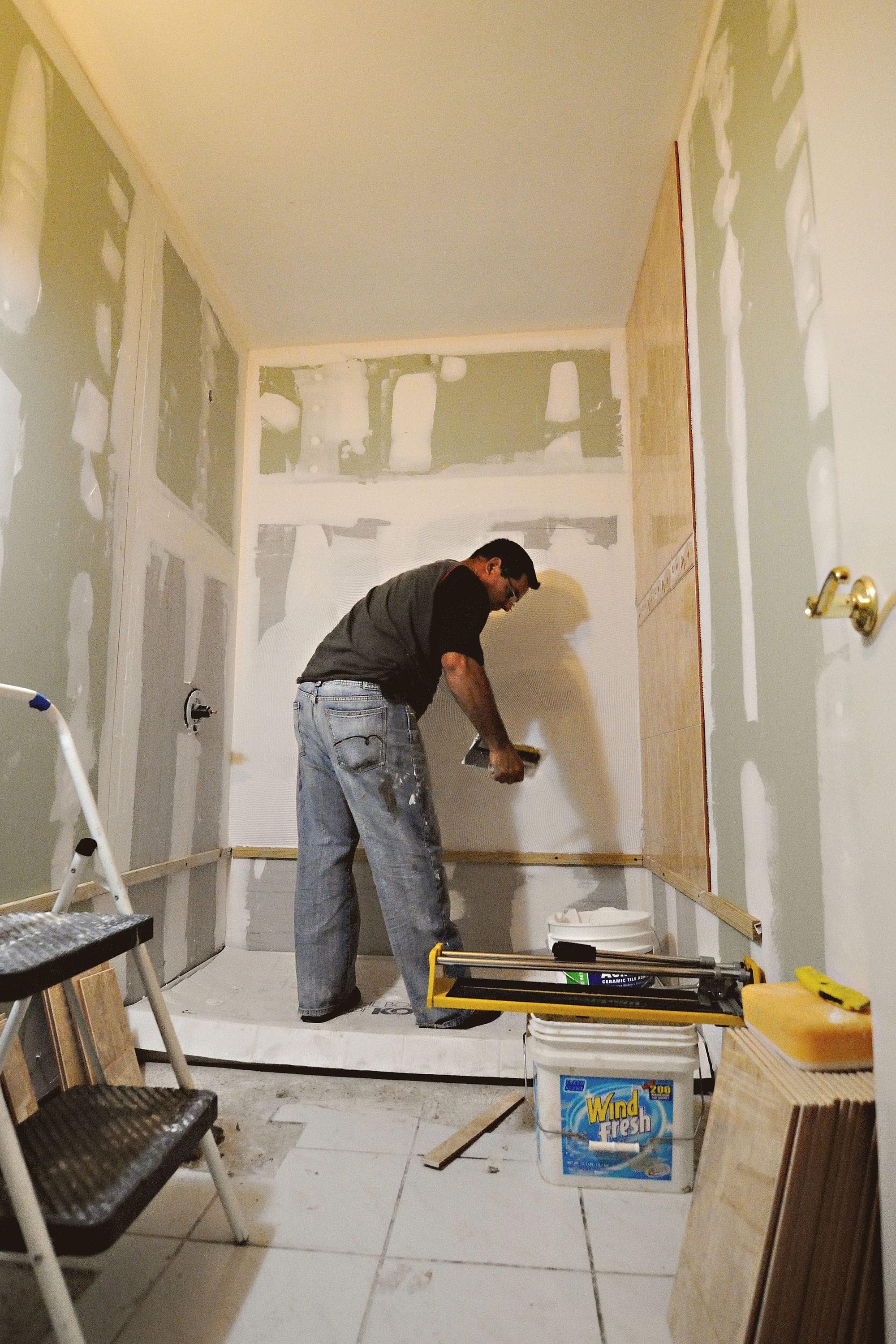
A full bathroom, day by day
This is how a five-day job runs for a family bathroom where the toilet stays roughly where it is, the shower walls are tiled or panelled to the ceiling and the rest to splash height. Rooms differ, but the order never does.
- 01
Day 1: protect, strip, first fix
Floor protection from the front door, dust sheets, water capped off. Suite, tiles and floor covering out, walls and floor inspected properly for the first time. Pipework renewed or rerouted, wastes and soil connections made and tested, cables in while the walls are open.
- 02
Day 2: boards, levelling, tanking
Walls boarded where tiles are going, floor levelled, wet areas tanked. Bath or shower tray set and plumbed so the wall finish can come down to it.
- 03
Day 3: walls
Wall tiles or panels go up: setting out, cuts round the window and the pipes, niches and trims. Each wall needs its adhesive to go off before grout.
- 04
Day 4: floor, grout, second fix
Floor laid once the walls are up, so the cuts hide under the wall finish. Grout on walls and floor; toilet, basin and vanity fitted and connected once the floor can take weight.
- 05
Day 5: shower, finishing, hand over
Shower valve and head, screen, furniture, towel rail, lights and fan. Every joint cleaned, then silicone, which needs a full day before water touches it. Everything run under pressure, the room cleaned, a walk round with you.
What adds days
- Moving the toilet or the bath: more first-fix work, often a day of floor work, and sometimes a day waiting for a new external connection.
- A wet room: the former, two coats of tanking with curing between them, and a flood test before tiling. Expect six to eight days.
- Tiling to the ceiling on every wall: a day or two more than splash-height tiling, more again with small or patterned tiles.
- Large-format tiles on uneven walls: the walls must be boarded or rendered flat first, which is a day and a drying period.
- Deliveries. A tray that arrives on day three instead of day one stops the job dead. Everything should be on site and checked before the rip-out.
- Surprises under the floor: rotten joists, old lead pipe, a waste with no fall. These are real, and a good fitter tells you the same day with the time and cost to fix them.
When the toilet and shower are out of use
In a one-bathroom house this is the question that matters. The toilet comes out on day one and is usually back, at least temporarily, by day two or three, as soon as the soil connection is made and the floor can take it. If the floor is being tiled it may come out again for a day and go back the next. We tell customers exactly which days those are before the job starts, so a neighbour, a relative or a day at work can be planned.
The shower is the last thing finished, because the valve and screen go in after the tiles and the silicone needs a day to cure. Plan on no shower at home for the length of the job. A bath can sometimes be used a day earlier if it goes in early and the walls around it are finished first, but counting on it is optimistic.
Smaller jobs
| Job | Working days | Why |
|---|---|---|
| Downstairs cloakroom | 2 to 3 | Two fittings, little tiling, but often a new waste run and a fan to duct |
| Ensuite | 3 to 5 | A compact room, but a full set of feeds, wastes, enclosure and tiling |
| Like-for-like refurbishment | 3 to 4 | No first-fix changes; strip, make good, finish, fit |
| Regrout and reseal | 1 | Old grout and silicone out, new in, a day to cure |
| Replace a shower enclosure and tray | 1 to 2 | Depends on whether the tray size changes and the tiles need patching |
| Wet room | 6 to 8 | Former, tanking coats, flood test and curing before any tile goes on |
Why jobs run over, and how to stop it
Almost every overrun we hear about comes from one of three things: products that were not on site at the start, a decision not made until the fitter asked (which tile goes where, how high the niche sits, which way the screen opens), or a trade that did not turn up when the programme needed them. The fix for all three is the same. Everything delivered and checked before the rip-out. Every decision made at the design stage and written down. One person running the job, with the electrician booked for the days the programme needs.
There is a fourth cause, which is a fitter running two jobs at once. Ask how many jobs the fitter has on during your dates. The right answer is one.
Ask for the dates in writing
A quote should state the start date and the number of working days. If the fitter cannot give you both, the plan does not exist yet.
The curing times nobody mentions
Several stages of a bathroom are waiting, and skipping the wait is how leaks happen. Each tanking coat needs its curing time before the next one and before tiling, and the manufacturer's figure decides it, which is why the tanking goes on early in the job. Standard tile adhesive needs around 24 hours before grouting; rapid-set adhesive can be grouted the same day but is harder to work with on large tiles. Grout wants a day before it is wetted. Silicone needs a full 24 hours before the shower is used. A self-levelling compound under tiles needs a day or more depending on depth. A programme that has no gaps in it for any of these is a programme that will leak.
Questions people ask
Can a bathroom be fitted in three days?
A cloakroom or a straight swap of a toilet and basin can. A full bathroom rarely can, because tanking, adhesive, grout and silicone each need curing time. Ours average four to five working days; a like-for-like refurbishment with nothing moved takes three to four.
How long does bathroom tiling take?
Splash-height tiling around a bath and basin takes about a day plus grouting. Tiling a shower area to the ceiling takes one to two days. A whole bathroom tiled floor to ceiling with a tiled floor is three to five days of fixing, cutting and grouting, longer with small or patterned tiles.
How long after tiling can you use the shower?
Allow 24 hours after grouting and a full 24 hours after the silicone goes on, so in practice two days after the last tile. Using a shower before the silicone cures is the commonest reason a brand new bathroom leaks at the corners within the first month.
Why does a wet room take longer than a shower room?
Six to eight working days for most rooms. The extra days over a standard bathroom are the former or screed, two coats of tanking with curing between them, and a flood test before any tile is laid. Rushing those stages is how wet rooms fail.
When should I book a bathroom fitter?
Good fitters are booked four to eight weeks ahead, longer before Christmas. Book once you have the layout agreed and the products chosen, then use the lead time to get everything delivered and checked. Starting a job with items still on order is the single biggest cause of overruns.
Next step
Tell us about your bathroom
Send a few photos of the room and a line about what you want changed. You get a free survey, an itemised quote in writing and a start date, and nobody chases you if you decide to wait.
Quotes are free, itemised and in writing. The price you agree is the price you pay unless you change the job.