Guide · 7 minute read
Which shower is right for your home?
By Dee Valley Bathrooms · Updated 3 November 2026
The short answer
The right shower depends on your hot water system before it depends on anything in a brochure. A combi boiler gives mains-pressure hot water but only as fast as the boiler can heat it, so a thermostatic mixer suits it well and a very large rainfall head may not. A hot water cylinder in an airing cupboard fed from a tank in the loft gives low pressure, so a mixer will dribble unless you add a pump or fit a power shower. An unvented cylinder gives mains pressure hot and cold and will run almost anything. An electric shower heats cold mains water on its own and works in any house with decent mains pressure, which is why it is the default in rentals and second bathrooms. Thermostatic valves hold the temperature when someone flushes a toilet, and they are the right choice wherever children or older people shower.
First, what heats your water
Find your boiler and your airing cupboard and you have most of the answer. There are three common systems in the houses around here, and each one points at a different shower.
| System | How to recognise it | Pressure and flow | Showers that suit it |
|---|---|---|---|
| Combi boiler | One wall-hung boiler, no hot water cylinder, no tank in the loft | Mains pressure; flow limited by boiler output, often 10 to 12 litres a minute of hot | Thermostatic mixer; electric as a second shower; avoid large rainfall heads on small boilers |
| Vented cylinder (gravity) | A copper cylinder in the airing cupboard and a cold tank in the loft | Low pressure, depends on the height of the loft tank; often under 0.5 bar | Power shower, pumped mixer with a twin-impeller pump, or an electric shower |
| Unvented cylinder | A white or steel cylinder with an expansion vessel, no loft tank | Mains pressure hot and cold, strong flow | Any mixer or thermostatic shower, rainfall heads, body jets |
| No hot water at the bathroom | Long pipe runs, immersion only, or an unreliable boiler | Whatever the cold mains gives | Electric shower |
The five kinds of shower
- 01
Electric shower
Heats cold mains water as it passes through, 8.5 to 10.5 kilowatts. Independent of the boiler, so it works when the heating does not. Flow is modest, around 4 to 6 litres a minute, and lower in winter when the mains is colder. Needs its own circuit and an isolator. The reliable choice for rentals and second bathrooms.
- 02
Manual mixer
Blends hot and cold with one or two controls. Simple and cheap, but the temperature moves when another tap runs. Needs balanced hot and cold pressure, which combis and unvented systems give and gravity systems do not.
- 03
Thermostatic mixer
A mixer with a wax or bimetal cartridge that holds the set temperature when pressure changes and shuts down if the cold fails. Available as exposed bar valves or concealed valves behind the tile. The default for any family bathroom on a combi or unvented system.
- 04
Power shower
A mixer with a built-in pump, made for gravity systems. Takes hot from the cylinder and cold from the tank and pushes them out at a proper pressure. Not for combis or mains-fed systems, which must not be pumped.
- 05
Digital shower
A processor box hidden in the loft or a cupboard controls temperature and flow; the control in the room is a dial or a touch panel, often wireless. Pumped versions exist for gravity systems. Precise and good for accessibility, at a higher price and with electronics to fail one day.
Flow, pressure and rainfall heads
Pressure is how hard the water pushes; flow is how much arrives. A shower that feels good needs both. A 9.5 kilowatt electric shower gives you around 5 litres a minute in winter whatever the pressure. A 24 to 28 kilowatt combi gives roughly 10 to 12 litres a minute of hot water at a usable temperature, which is fine for a standard head and marginal for a 300 millimetre rainfall head, which wants 12 litres a minute or more to do anything but drizzle. An unvented cylinder on good mains gives 15 to 20 litres a minute and will run a rainfall head and a hand shower together.
So the brochure question is the wrong way round. Decide what your system can deliver, then choose a head that will feel right at that flow. A 200 millimetre head on a combi feels generous; a 400 millimetre head on the same boiler feels like standing under a wet cloud. We measure your flow at the survey with a jug and a watch, and tell you what will work before you buy anything.
Pumps, and when you need one
If you have a vented cylinder and a loft tank, the pressure at the shower depends on the height of the tank above the shower head, and in a bungalow or a loft conversion that is often almost nothing. The fix is a twin-impeller shower pump, fitted near the cylinder, drawing hot from a dedicated connection and cold from the tank, and boosting both to 1.5 to 3 bar. Positive-head pumps need the tank well above the shower; negative-head pumps work where it is not. Pumps make noise and need a 13 amp supply, so they live in a cupboard, not above the ceiling you sleep under.
You cannot pump a combi or an unvented system; both are already at mains pressure and the manufacturers forbid it. If a shower on one of those systems is weak, the problem is the mains, the boiler's output or a blocked valve, and a pump will not help.
Thermostatic safety
A thermostatic valve does two things a manual mixer does not. It holds the temperature you set when someone flushes a toilet or runs the kitchen tap, and it shuts off the hot if the cold supply fails, so nobody is scalded. Most have a maximum temperature stop set around 38 to 41 degrees. In any house with young children, older relatives or anyone with reduced sensation, a thermostatic valve is the only sensible choice, and it is the one we fit by default.
The jug test
Hold a 10 litre bucket under the bath tap on hot and time how long it takes to fill. Under 60 seconds, you can run most showers. Over 90 seconds, choose the shower and the head to suit a low flow, or plan a pump if you have a loft tank.
What we fit where
- Family bathroom on a combi: an exposed thermostatic bar valve with a fixed head of 200 to 250 millimetres and a hand shower on a riser rail.
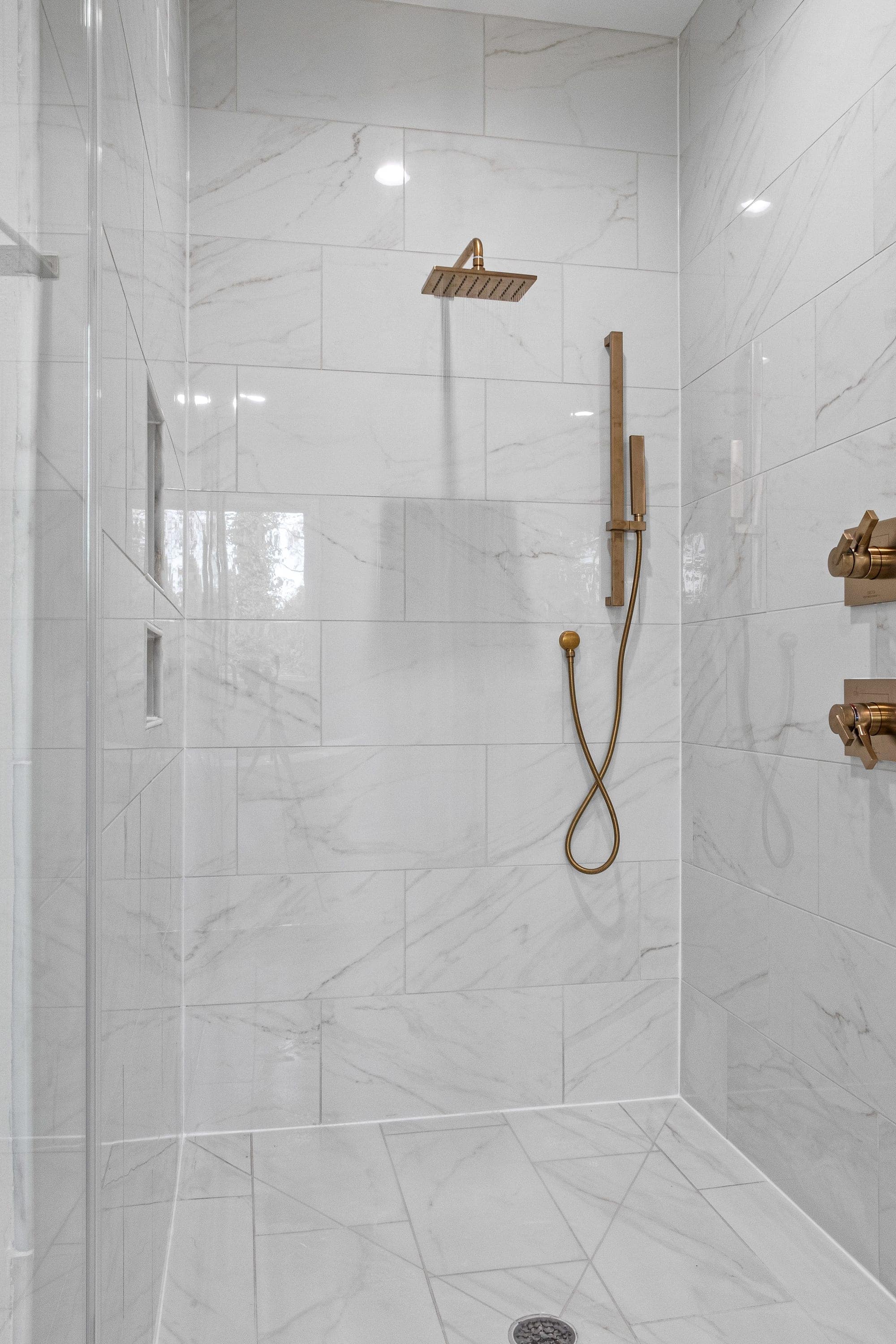
- Family bathroom on an unvented cylinder: a concealed thermostatic valve, a ceiling or wall rainfall head, and a separate hand shower.
- Gravity system with a loft tank: a twin-impeller pump and a thermostatic mixer, or a power shower where the budget is tighter.
- Rental or second bathroom: a 9.5 kilowatt electric shower on its own circuit with a pull-cord isolator.
- Accessible bathroom: a thermostatic valve with lever controls or a digital control mounted where it can be reached from a seat.
Questions people ask
Is an electric shower better than a mixer shower?
Neither is better; they suit different houses. An electric shower works independently of the boiler and gives a modest, steady flow, which suits rentals, second bathrooms and homes with unreliable hot water. A thermostatic mixer on a combi or unvented system gives far more flow and a better shower, as long as the hot water system can feed it.
Why is my shower pressure so low?
On a gravity system with a loft tank, because the tank is not high enough above the shower head; the fix is a pump or a power shower. On a combi, because the boiler cannot heat water fast enough for the head you have, or the mains is weak, or a valve or filter is blocked. A pump is never the answer on a combi.
Can you have a rainfall shower with a combi boiler?
Yes, within limits. A 24 to 28 kilowatt combi gives around 10 to 12 litres a minute of hot water, which runs a 200 to 250 millimetre head well. A 300 or 400 millimetre head wants more flow than that and will feel weak. Measure the flow before buying the head, not after.
Do I need a shower pump?
Only if you have a vented hot water cylinder and a cold tank in the loft and the pressure at the shower is poor. A twin-impeller pump near the cylinder boosts hot and cold together. Combi and unvented systems are already at mains pressure and must not be pumped.
What kilowatt electric shower is best?
For most homes a 9.5 kilowatt shower is the sensible choice: noticeably better flow than 8.5 in winter, and it runs on a circuit most houses can accommodate. A 10.5 kilowatt unit gives a little more but needs heavier cable and a bigger breaker. Check the mains pressure meets the manufacturer's minimum, usually around 1 bar.
What is a thermostatic shower and do I need one?
A mixer with a cartridge that holds the temperature you set when other taps run and shuts off the hot if the cold fails. It prevents the sudden scald when someone flushes. In any home with children or older people it is the right choice, and it is what we fit as standard on combi and unvented systems.
Next step
Tell us about your bathroom
Send a few photos of the room and a line about what you want changed. You get a free survey, an itemised quote in writing and a start date, and nobody chases you if you decide to wait.
Quotes are free, itemised and in writing. The price you agree is the price you pay unless you change the job.