Guide · 7 minute read
How much does bathroom tiling cost? Labour per square metre in the UK (2026)
By Dee Valley Bathrooms · Updated 3 November 2026
The short answer
Bathroom tiling labour in the UK typically costs £40 to £70 per square metre for standard ceramic wall tiles in 2026, £50 to £90 for floors and large-format porcelain, and £80 to £120 for mosaics, herringbone and other patterns that are mostly cuts. Preparation sits on top: boarding, levelling and tanking add £200 to £800 to a room, and are the part that decides whether the tiles stay flat and dry. The tiles themselves run from about £15 a square metre for basic ceramic to £120 and more for natural stone. For a typical 1.7 by 2 metre bathroom that means roughly £450 to £750 of labour for splash areas, or £1,200 to £1,900 for walls to the ceiling plus the floor, before tiles and preparation. Typical market figures from published UK trade cost guides and the quotes we see locally, not Dee Valley Bathrooms' prices; ours are itemised after a free survey.
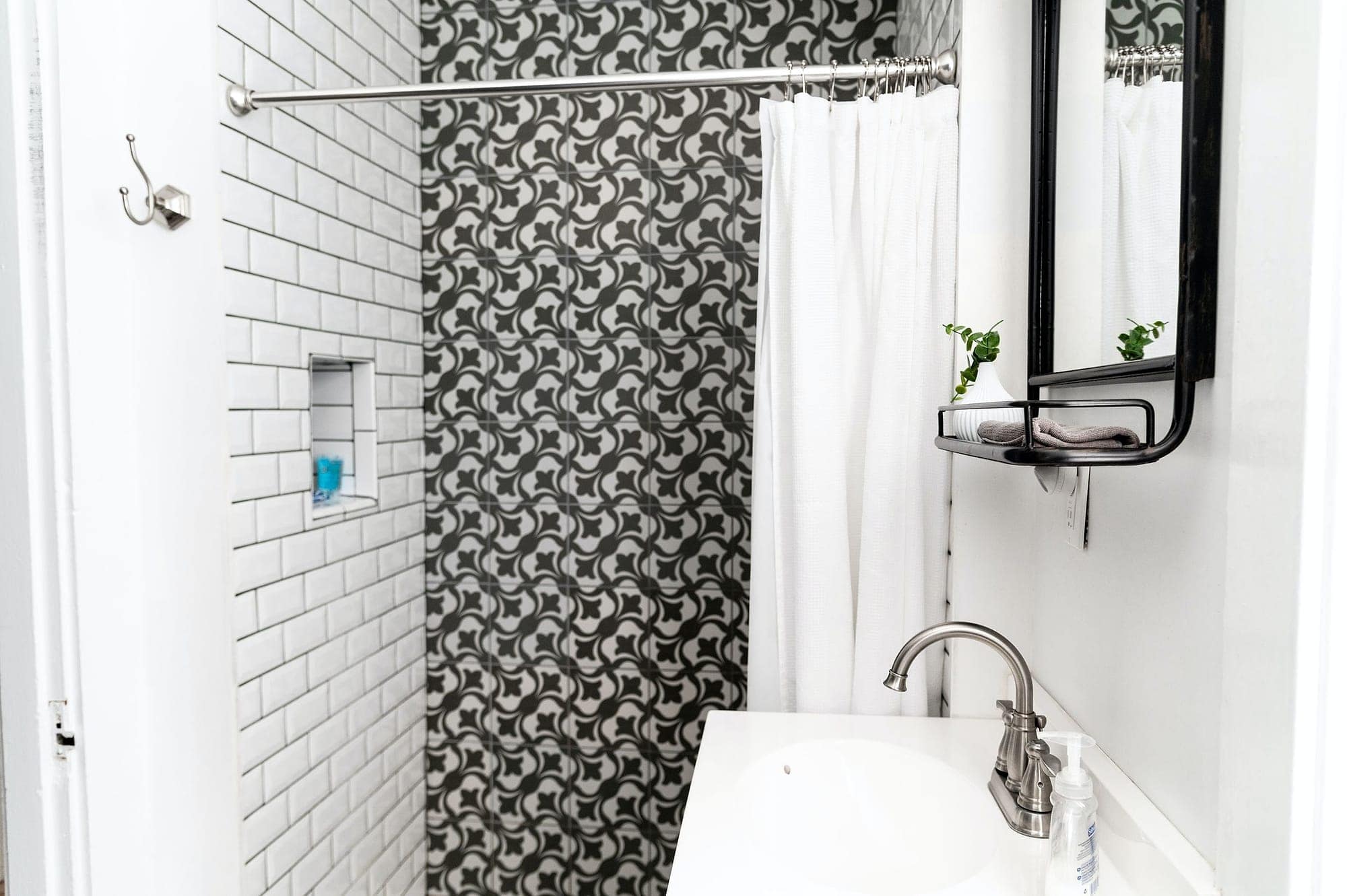
Why the labour range is so wide
Two tilers can quote the same bathroom and be hundreds of pounds apart, both honestly. A 250 by 400 ceramic wall tile on a sound plastered wall is quick: a tiler lays several square metres an hour and the cuts are simple. A 600 by 1200 porcelain slab needs two people, a levelling clip system, a wet cutter and a wall flat to within a couple of millimetres, so the rate per square metre goes up even though there are fewer tiles. Herringbone, chevron and mosaic sheets are mostly cutting and setting out, and the rate climbs again.
The substrate matters as much as the tile. Old plaster in a Victorian terrace, a bowed stud wall, a floor that moves: each adds hours before any tile goes on. And small awkward areas cost more per square metre than big open ones, because a window reveal, a boxed pipe or a niche takes as long as a metre of plain wall.
Preparation: the money that keeps the tiles on
Boarding a wall with cement board or a tile backer typically adds £25 to £45 a square metre supplied and fixed. Levelling a floor with a self-levelling compound adds £150 to £400 for a bathroom floor depending on depth. Tanking the shower and bath areas with a liquid or sheet membrane adds £150 to £350. Together that is the £200 to £800 band, and it is the part of a tiling quote people are tempted to cut.
Do not. Large tiles on a wall that is out of true show a lip at every joint. Tiles on an unlevelled floor crack along the joists. A shower that is tiled straight onto plasterboard with no membrane leaks into the room below the first time a grout line opens. Nikolay boards, levels and tanks before tiling because the alternative is doing the job twice.
Tile prices by type
| Tile | Typical supply per square metre | Fitting notes |
|---|---|---|
| Ceramic wall tiles | £15 to £35 | Quickest to fit; walls only |
| Standard porcelain, 300 by 600 or 600 by 600 | £25 to £50 | Floors and walls; flexible adhesive, wet cutter |
| Large-format porcelain, 600 by 1200 and up | £35 to £80 | Flat substrate, two people, levelling clips; premium labour |
| Metro and brick-shaped ceramic | £20 to £45 | Pattern and bond add setting-out time |
| Mosaics on mesh sheets | £40 to £120 | Shower floors and niches; high grout content, slow |
| Natural stone: marble, limestone, slate | £50 to £120 and up | Must be sealed and resealed; specialist adhesive; premium labour |
| Terrazzo and encaustic-look porcelain | £40 to £90 | Pattern alignment matters; order 15 percent extra |
Typical UK retail and trade ranges in 2026. Allow 10 percent extra for cuts on plain layouts and 15 percent on patterns and diagonals.
A worked example: the 1.7 by 2 metre bathroom
Most bathrooms in the semis and terraces around Wrexham and Chester are close to 1.7 by 2 metres with a ceiling at 2.4. The wall area is the perimeter times the height: 7.4 metres by 2.4 is about 17.8 square metres, less a door and a window at roughly 2.4 square metres, so about 15.4 square metres of wall. The floor is 3.4 square metres. Add 10 percent for cuts and you are buying about 21 square metres of tile for a floor-to-ceiling room.
Splash areas only, which means the shower or bath walls to the ceiling and a strip behind the basin, is usually 7 to 9 square metres. At typical labour rates that is £450 to £750 of tiling labour, plus preparation. Floor to ceiling plus the floor, about 19 square metres laid, is £1,200 to £1,900 of labour, plus preparation. With mid-range porcelain at £35 a square metre, adhesive, grout, trims and the preparation band on top, a fully tiled family bathroom typically lands between £2,200 and £4,500 for the tiling element alone. A splash-area room in ceramic can be under £1,200.
The small items on the quote
- Adhesive: a flexible, polymer-modified adhesive for porcelain and floors, £15 to £30 a bag, about one bag per 4 to 5 square metres.
- Grout: flexible, mould-resistant grout for walls; epoxy grout on floors and in wet rooms where staining matters, which costs more and takes longer to apply.
- Trims and profiles: metal or colour-matched edging on external corners and the top of half-height tiling, £8 to £20 a length.
- Silicone: a matching colour in the movement joints only, never in a grout line. £10 to £15 a tube, two or three tubes a room.
- Regrouting and resealing instead of retiling: £150 to £400 for a day's work when the tiles are sound. The cheapest way to make an old bathroom look new.
How to read a tiling quote
A good quote names the tile format and the preparation it needs, says whether the walls are being boarded and the wet areas tanked, and prices labour by the square metre or by the day with the days stated. Ask how the tiles will be set out: from the centre of the main wall so cuts are equal at both ends, not from a corner. Ask whether a levelling clip system is used on tiles over 600 millimetres. Ask for an R10 slip rating on a bathroom floor and R11 inside a shower or wet room. Ask where the movement joints go, because silicone where grout should be, or grout where silicone should be, is the commonest fault we are called to fix. If a quote has one line that says tiling with a single number, ask for it to be split into preparation, labour and materials before you compare it with anyone else's.
Day rate or square metre?
Both are honest if the quote is itemised. A typical UK tiler's day rate is £200 to £300 and a competent tiler lays 8 to 12 square metres of standard tile a day, less for large format or patterns, so the two usually come out close. What matters is that the preparation, the materials and the number of days are written down separately.
Questions people ask
Why do tilers charge more for large-format tiles?
A 600 by 1200 porcelain slab needs a wall flat to within a couple of millimetres, two people to lift it, a levelling clip system to stop lippage and a wet cutter for every cut. There are fewer tiles but each takes longer, and a mistake costs £40 or more of tile. Expect the top of the labour range and a boarding line on the quote.
Should I pay a tiler per day or per square metre?
Either, as long as the quote states the days or the metres and lists preparation and materials separately. Per square metre suits big plain areas; per day suits awkward rooms with niches, boxing and windows. A typical UK tiler lays 8 to 12 square metres of standard tile a day at a day rate of £200 to £300.
How many tiles do I need for a bathroom?
Measure each wall's width times its height, add them up, subtract the door and window, add the floor, then add 10 percent for cuts on a plain layout or 15 percent for patterns and diagonals. A 1.7 by 2 metre room tiled floor to ceiling comes to about 21 square metres including the allowance. Keep a few spares for future repairs.
Is porcelain worth the extra over ceramic?
On floors and in showers, yes: porcelain is denser, barely absorbs water and takes knocks that chip ceramic. On a splashback or a dry wall, ceramic does the job for less and is quicker to fit. Many rooms mix the two: porcelain on the floor and in the shower, ceramic elsewhere.
Do I need to tile a bathroom floor to ceiling?
No. Tiles to the ceiling inside the shower and around the bath, with painted walls elsewhere, is cheaper and often looks calmer. Full-height tiling suits wet rooms, small rooms where one surface makes the space read bigger, and rentals where wipe-clean walls save redecorating. It roughly doubles the tiling labour.
What is tanking and do I need it before tiling?
Tanking is a continuous waterproof membrane, liquid or sheet, applied to the boards behind the tiles in the shower and bath areas and lapped into the tray or drain. Grout and silicone are not waterproof for life; the membrane is what stops a failed joint reaching the wall and the ceiling below. Every shower area we tile is tanked.
Next step
Tell us about your bathroom
Send a few photos of the room and a line about what you want changed. You get a free survey, an itemised quote in writing and a start date, and nobody chases you if you decide to wait.
Quotes are free, itemised and in writing. The price you agree is the price you pay unless you change the job.